Archive

Showing posts with label View. Show all posts

Tuesday, 29 March 2011

An exploration into the Yorkshire dialect

Flat caps, pints of bitter and roll-ups - what comes to mind? Yorkshire speakers have; ever since I can remember; been stereotyped in such a way that suggests country pubs, rolling hills and the villages of ‘God’s own country.’

Due to my proud heritage as a Yorkshireman, the county’s rich and diverse range of dialects greatly interest me. But how much truth can be taken from these stereotypical representations, and how is the mentality of the North encoded through speech?

‘Yorkshire wisdom’ is a term that continually crops up alongside the country’s perception of the Northern constituent. The idea that Yorkshire folk know best is all too common, leading to the suggestion that this wisdom is embedded in their unique phrases and idioms.

The wealth of this unique dialect is expressed predominantly through older generations, my Grandmother being a prime example of the Yorkshire wisdom. On visiting her, a whole host of rich dialect sayings are often exchanged - with most being truly fascinating. “He’ll stand ‘egg under ‘cap” is one of my personal favourites, meaning someone who is easily fooled. It almost denotes the fact that the subject in question would literally place an egg on their head if commanded to, due to their gullible nature - a wonderful idiom.

But what are the roots of these sayings? The environment of the Yorkshireman goes a long way in shaping many of the phrases that are found in the dialect. In regard to my Grandmother’s term, the idea of a ‘cap’ harks back to the traditional farmer’s flat cap. Connotations of the countryside are also drawn through ‘egg,’ bringing to mind the rural farmlands of the county. So embedded in Yorkshire terms, these environmental factors do seem to be key - another example being the humorous idiom “were you born in a field?”  As well as presenting the values of common sense that are etched into the Yorkshire way of thinking, this saying holds a subtle command to close a door that is left ajar. It also sarcastically hints at the fact the recipient of the utterance isn’t aware of the practise of closing doors.

The imbedded procedure of ellipsis (omission of words) and elision (omission of syllables) is also a fascinating implication of the Yorkshire dialect, with abbreviated utterance forms being the norm in local speech patterns. A common example of this being “I’m off t’ shop,” which replaces “to the” with one sharp syllable. It simultaneously combines both of the proposed dialect features, whilst still clearly conveying the intended information through an abbreviation. Speech such as this reinforces the ‘straight to the point’ attitude of Yorkshire speakers, bred from a more laconic lexicon where by a lot of information is expressed through very few words. This taciturnity is a great skill, yet a simple feature which helps form the identity of Yorkshire speakers - allowing for easier and snappier exchanges.

The modern media also shapes the perception of Yorkshire speakers as well as being a strong factor towards echoing their mentality. Comedic performances in sketch shows which instigate humour through the dialect and its unique features, such as Harry Enfield’s character George Integrity Whitebread, light heartedly mock ‘Yorkshire-isms’ whilst reinforcing the idea that the county’s residents have an honest and seemingly unchallengeable point of view. Whitebread’s catchphrase - “I say what I like, and I like what I bloody well say” doesn’t just represent Yorkshire dialect through the informal adjective ‘bloody,’ but raises the stereotypical assumptions that the folk up North know best… or at least we think we do.

In addition, advertising also plays a large part in emphasising this mentality with the likes of the Yorkshire based broadband company - Plusnet. Slogans at the end of each advert such as “a call centre down t’ road” and “good honest broadband from Yorkshire” once again channel typical Yorkshire dialect into the language, as well as suggesting a sense of pride about being from the region.

Although a proud heritage surrounds Yorkshire and its speakers, some linguists fear that as the modern age approaches, regional dialects may become increasingly diluted through the rise of ‘Standard English’. Martyn Wakelin, author of ‘discovering English dialects’, is among the sceptics who believe that local identities revolving around speech are dying out.

Wakelin stated that regional dialect “is being eroded” and “is best preserved within rural areas, particularly among older generations.” Does this mean then that when our most aged relatives (who hold this seemingly undying wisdom) depart this life, will Yorkshire and other English dialects slowly pass out of usage? I for one hope not, because dialect determines our identity and ultimately represents who we are. Or as my Grandmother would say, “we nowt wi’ out ‘r roots.” 

Thursday, 24 February 2011

The growth of the mobile phone - An insight

It is now, in the modern day, one of the near essentials of life to carry around a mobile phone. The development of the technology progresses on a year by year basis, producing gadgets more revolutionary each time. But how has this concept come about? Mobile phones surely didn't just pop up out of nowhere? So to show you how they started and how they became what they are now; I will be taking you on a trip down memory lane, picking up on the phones that marked major turning points for the industry.


Motorola DynaTAC 8000X


I will start your journey with the first ever true mobile phone - the Motorola DynaTAC 8000X. Trialed as early as 1981 in the United States, the 8000X was an example of the 'First Generation' (or '1G') in mobile phone technology - running on a cellular network. It was a brick of a phone, asking a lot of its status as mobile.


2G Phones


In the early 1990's, the second generation in mobile phones arrived. These presented digital connectivity, as opposed to the old analogue technology used in first generation models. This allowed for capabilities such as voice services and text messaging. But most importantly; this wave of phones were much more mobile, due to lower radio signals needing less power to make calls. 2G phones were the base for more modern handsets to be developed from.


Nokia 3210

Released in 1999 and one of the most popular and successful phones in history, the 3210 sold 160 million units worldwide. It elaborated on 2G technology, featuring an internal antenna which left behind previous phone's unsightly aerials. Also including: a changeable cover, customisable ring tones and a slim-line design - its popularity was phenomenal. The 3210 was a real bench mark for the development of mobile phones and set standards which weren't met for at least a couple of years after its release.


NTT DoCoMo 505i

After the 3210, Nokia and other large manufacturers began to ship out more modern versions of their handsets. These new versions brought forward similar features, but with two big differences - one being colour screens and the other, a camera. Although this is true, these cameras were only a very basic VGA quality. Then, in 2003, along came NTT with the first ever mobile phone featuring a mega-pixel camera. 1.3 mega-pixels to be exact. Although this sounds basic in the modern world, this technology was sophisticated enough to rival some digital cameras of the time. NTT were soon never to be heard of again as bigger manufacturers quickly snapped up the mega-pixel madness.

3G Phones

As expectations began to increase regarding mobile phones after the turn of the century, the internet also began to grow at an alarming rate. So, with that in mind, manufacturers began to produce the third generation in phones (3G). The term 3G has now come to denote the internet and with this new technology, people could now make video calls to their friends in other places and access the internet through their mobile phones. Imagine that? Sitting on the toilet while surfing the web. Amazing!

Sony Ericsson W800i

Now that people had most of their best interests catered for in their phone, music was the next summit to mount for developers. Although music players had been tried and tested for a couple of years before 2006 on mobile phones, no handsets were specifically designed for musical capabilities. Then in that same year Sony Ericsson, who were probably the biggest manufacturer at the time, released their first Walkman phone - the W800i. As well as having all of the latest features, it included a music player chiselled from Sony's already successful and dedicated Walkman range. This spawned many more similar phones as Sony Ericsson attempted to fine tune their musical application.


Apple iphone

Apple's reign of technological achievement soon set its beady eyes on the mobile phone market. With the iphone, the developers were seeking to blow all other phone companies out of the water. And I think they might just have achieved it. With a huge build up and months of anticipation, the iphone was released in Summer 2007. It marked the birth of the smart phone and worked solely to provide for itself, springing up things such as the app store - made specifically for Apple. It also boasted a touch screen, one of the first phones to do so in the modern market. The years following its release gave birth to three new models: the iphone 3G, 3GS and 4. These models filled in the flaws of previous handsets, creating a more definitive experience for consumers.

Samsung i8510 INNOV8

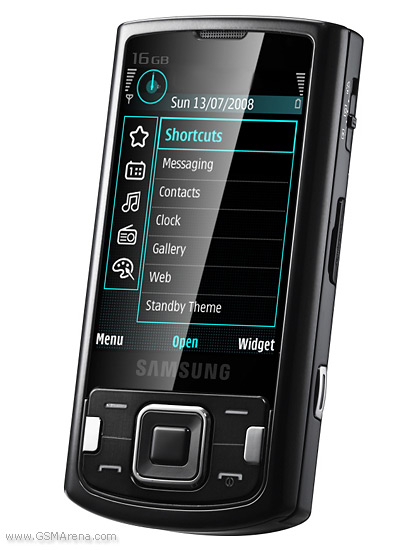
No manufacturers managed to successfully compete with the iphone following its release. Thankfully, its only drawback was its pricing, so some consumers turned to other alternatives. These included smart phones with the Symbian operating system, allowing for a more developed handset. One of the front runners in the stint of Symbian technology was Samsung, who introduced their i8510 model at the end of 2008. This was the first phone to offer an 8 mega-pixel camera and featured a staggering 16GB of internal memory - pretty impressive in comparison to rivalling models. The i8510 was just one of many Symbian phones released by manufacturers, with some handsets still being produced with the operating system today.


Android Phones

Now, Apple have to watch their backs because of the newly emerging Android operating system powered by Google. And who else but Google could mount an assault against the iphone? Many manufacturers have taken to the technology, including: Samsung, HTC, Sony Ericcson and Motorola. These devices now work alongside each other through the market in healthy competition, as the likes of the Samsung Galaxy S and HTC Desire challenge the iphone 4.


Phones are now starting to introduce gaming and 3D technology, whilst attempting to branch further out into the entertainment industry. So what will happen after that? Who knows...

Thursday, 20 January 2011

A view on comedy

Comedy has a sole purpose, to make people laugh. Its agenda is simple. Creating laughter equals a successful comedic routine. I agree with that fact, but it's well known that a large majority of us don't. Political correctness has quite obviously gone mad when jokes can't even be taken out of the real world and treat simply as their purpose. The term 'joke' insinuates the fact that there is no seriousness implied or overwhelming complications intended post-utterance. As Billy Connolly once said in times when even mentioning the word 'penis' on stage was frowned upon - ''No matter how excruciating, if it makes at least one person laugh, it's a joke.'' Can you really deny gags that solitary right of freedom?

So now that I've stated where I stand regarding comedy, I can now go into detail about the types of jokes that in my view are the most successful - starting with Tim Vine. Vine's stance on joke telling is revolutionary, yet simultaneously extremely old fashioned. But that's how I like it. He crams copious amounts of one-liners into his shows, never once failing to rouse at least hundreds of laughs per joke. The brain power needed to reel of these puns is, I'll admit minimal, but it's the way he does it that gives me laughing fits for minutes on end. Consecutive killer blows of hilarity which seem never ending and incredibly childish. These are the sort of jokes that anyone can tell, but will stay alive forever. 

Butcher: If you can get those two pieces of meat down from the hooks above me you can have them for free.
Man: No
Butcher: Why?
Man: The steaks are too high.

They're almost so bad they're good.

The other type of joke that hits my funny bone is the 'long winded seemingly never ending please get to the punchline soon' one. There are so many examples of these gems and whatever the punchline, in my view they always seem to be hilarious. Leading the viewer down a path of mystery is the epitome of modern comedy because of the overwhelming anticipation generated. Billy Connolly, who I referenced earlier is undoubtedly my most favourite comedian. His ability to make these sorts of gags work so effectively is why I hold him in such high regard. That entwined with the long winded joke concept makes for comedy gold, which I will try to re-create here.

A couple lay in bed, all nice and warm and not not expecting any disturbances. Thunder crashes outside as the rain clatters against the roof. In the safety of their own home, this doesn't bother them. Suddenly there is a hard and repetitive knock at the door. 'BOOM BOOM BOOM!'
          'Who the hell is that? I'm not answering it. I'll leave it and they'll go away soon,' the husband exclaims.
The knocking continues. After more continuous knocking the wife manages to get her husband to see to the person at the door. He goes downstairs and opens the door to be confronted by a man dripping wet at his doorstep.
          'I need help, I'm stuck and I need a push. It's an emergency,' the unknown man pleads.
The husband shouts at the man for waking him at such a stupid hour, tells him to f*** off and slams the door. After getting back into bed, the husband is asked by his wife who it was at the door. After he has explained, the wife looks at her husband in shock and disgust.
          'Last year we broke down and that kind gentleman helped us by giving our car a push in dreadful conditions like these. The least you can do is be an honourable citizen and re-pay the favour by helping that man outside with his car,' the wife preaches.
The husband then gets out of bed, gets dressed, puts his boots on and heads outside. The man that was once there at the doorstep seems to have disappeared.
          'Where are you?' Shouts the husband.
A voice of the man can be made out in the distance.
          'I'm over here, on the swing!'

Pure gold. And don't try and deny that you didn't laugh.

Comedy is also effective when relating to the audience. Comedic routines are engaging and hilarious when on reflection you think; 'I do that', 'I know someone who says that' or 'that's happened to me before.' Peter Kay is the undisputed master of this type of humour and emphasises this comedic method with gags such as 'cheesecake' and 'the big light.' In my view, nobody comes close to Kay in this regard, but I'd still have to say that Billy Connolly's story telling is second to none. And for that reason, Connolly hits the spot every time.

Wednesday, 12 January 2011

3D Movies and Television - What's the big hype?

If someone asked me a few years ago if 3D was ever going to catch on I'd have probably said no. As far as development of the technology went in my eyes, the concept wasn't going to become any more advanced in the long run, it would just keep up with the times. And for the most part, here today in 2011, it has done exactly that. Okay, it might be a little more advanced that the days of watching post-converted 3D films at the cinema with those horrendous red and blue lensed glasses, but can you really say the actual concept has been progressed so that we are receiving something new and ingenious? 


As far as the film industry goes, 3D is primarily there as a means of making extra revenue per film. So in that sense, there is a perfectly viable reason for film makers to take this opportunity with both hands. A good example of this was with the 2010 adventure movie - Clash of the Titans. The whole product was filmed entirely for standard 2D release, shortly before the '3D revolution' had really kick started. Somewhere along the line in post production, the film makers must have caught on to something. 'If we convert our film into three dimensions, we'll double our winnings at the box office!' Why? Because they'd get more viewers through the 'but it's in 3D' advertising technique and ultimately, ticket prices would have to rise (so that viewers can cover the cost of those hideous glasses). Having not actually watched it first hand, I'd have to rely on reviews (and the overwhelming majority) to determine whether the release was a hit with the public... or not. All sources led to one conclusion, the film makers were taking advantage of  fans by offering a second rate post-converted headache of a movie. And that's what all 3D technology is about. Getting more cash off us - the paying public!


Toy Story 3. A terrific movie and another asset to Pixar's long line of dazzling masterpieces. After around fifteen minutes I lost the connection with the 3D side of the production and didn't particularly recognise the fact that the film was (apparently) jumping out of the screen. I could have quite easily paid one or two pounds less to watch the exact same movie as a two dimensional product. Waste of time and money? For us, but not for them. Disney must have been raking in the extra cash. 3D has not only conquered the film industry, television is now feeling the full force of the media hammer. Just as High Definition television is becoming popular, a new contender arrives on the scene. And the industry knows all too well that the public want the newest and most up-to-date pieces of kit on the market. That's why manufacturers can put a £1000+ price tag on any new television, which bears all of the same features as your old one, apart from the fact that it requires you to sit in front of it wearing silly glasses. Soon enough, 3D will seem pretty boring and out-dated to most. About the way I feel regarding it now.


But even when you choose not to watch these films in the 3D form, the movie producers will hit you with the line: 'It's made for 3D, don't watch in 2D because it will ruin the experience.' And that makes me ponder the fact why they release a standard version anyway. It's because of the difference in price. But by this time the audience are going to pay for the most expensive ticket so that they can enjoy the best experience, simply due to them being pressured into it. This is exactly the way I felt about the statement Michael Bay released (regarding my point on being pressured) in his upcoming flick - Transformers: Dark of the Moon. He filmed a lot of this product using 3D cameras, so the point movie makers raised was a fair one when taking into account a high end budget film such as Transformers. I'm definitely going to pay more so that I get the best possible experience out of this film because I enjoyed the first two movies. But not for the 3D... for the peace of mind.